
Every now and then, homeowners will want to request HOA documents for examination. Board members must know how to deal with such requests in accordance with Maryland law. Similarly, homeowners should understand their rights when it comes to access to association records.
Can Homeowners Request HOA Documents?
In general, homeowners do have a right to request HOA documents for copying or inspection. Many states have laws that protect this right and require associations to comply with such requests. Governing documents also typically support an HOA open records request.
In Maryland, Section 11B-112 of the Homeowners Association Act allows homeowners to request documents from their HOA. A similar law exists under Section 11-116 of the Maryland Condominium Act.
This document access requirement is critical as it promotes transparency within the community. When homeowners can freely view their association’s financial records, governing documents, minutes, and other documents, they can keep the HOA board in check and accountable.
How to Get HOA Documents in Maryland
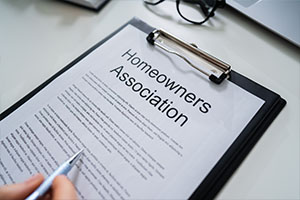
There are a few ways homeowners can request HOA documents in Maryland. They receive these documents upon purchase as part of a disclosure package. Additionally, they can access them through public records, via the HOA’s website, and by submitting a formal request to their board or manager.
Upon Purchase
Most states have disclosure laws that require sellers to provide certain documents to buyers. These include documents relating to the HOA or condo association.
Disclosure packages typically include the association’s governing documents, recent financial reports, reserve summaries, meeting minutes, and other relevant information. The idea is to allow buyers to examine what they are potentially buying into. This gives them a chance to back out if they find the association lacking or incompatible with their needs or expectations.
Public Records
Are HOA documents public record? Yes, this is another way homeowners can request HOA documents. In Maryland, associations record their governing documents (and any amendments) with the county clerk’s office.
Keep in mind that not all documents are filed with the county or state. For instance, meeting minutes and most financial reports are not publicly available. That said, governing documents, including the articles of incorporation, and other legal documents, can typically be found in public records.
Formal Request
Homeowners can request HOA documents directly from their association, through the HOA board or manager. They can do this by writing and submitting an HOA request letter that includes all the details of the request.
Section 11B-112 of the Maryland HOA Act states that:
- Associations must make all books and records available for copying or examination for lot owners, their mortgagee, or their authorized agents or attorneys.
- Owners may access these records during regular business hours and after reasonable notice.
- Associations must comply no later than 15 business days after the request.
- If a homeowner requests in writing copies of the HOA’s financial statements or board meeting minutes, the board must provide them. They can send them by mail, email, or hand delivery. If the records requested were created in the past 3 years, the board must send them within 21 days. If the records are older than 3 years, the board has up to 45 days to send them.
Section 11-116 of the Maryland Condominium Act states that:
- Condos must designate a place where owners, their lenders, or their authorized representatives can review or copy association records
- Owners may access these records during regular business hours and after reasonable notice.
- If a unit owner makes a written request for copies of the condo’s financial statements or board meeting minutes, the board must provide them. They can send the documents by mail, email, or hand delivery. If the records were created in the past 3 years, they must be sent within 21 days. If the records are more than 3 years old, they must be sent within 45 days.
HOA Website
Many associations maintain a website or an owner portal. Typically, homeowners can access HOA documents through these channels. That said, it ultimately depends on the association and whether or not the board publishes all records.
A website is more public than an owner portal. Websites are available to anyone, whereas owner portals require secure logins to access information. Boards should carefully choose the type of platform they want to use.
What Documents Can I Request From My HOA?
Generally, homeowners can request all books and records from the association with a few exceptions:
- Personnel Records. These include employee files, but salary and compensation information must still be available.
- Medical Records. This covers any individual’s health information.
- Personal Financial Records. This includes details like income, assets, debts, bank balances, or credit history.
- Business Negotiations. This covers records of transactions still under negotiation.
- Legal Advice. This includes written opinions or advice from the HOA’s attorney.
- Closed Meeting Minutes. This covers records of closed board meetings, unless the board later votes to make them public.
Associations can withhold the above records, except from the person the record is about (or their authorized representative or guardian).
How Much Does an HOA Document Request Cost?

When homeowners request HOA documents, they are often surprised to find that their association imposes fees. This then begs the question, “Can an HOA charge for community association record requests?”
Generally, associations can charge owners for a document request. Many states limit the amount the HOA can charge for such a request to avoid abuse or overcharging.
In Maryland, associations may charge a reasonable fee to an owner who wants to review or copy the records or who requests delivery of such records. Apart from that, associations may not charge any costs. Furthermore, charges may not go over the limits stipulated under Title 7, Subtitle 2 of the Courts Article.
A Two-Way Street
Maryland law protects homeowners’ right to request HOA documents in support of transparency and accountability. Homeowners deserve to know what’s going on in their communities. Meanwhile, board members must comply with records inspection laws to avoid liability and build trust.
Majerle Management, Inc. provides enforcement assistance to HOAs and condo associations in Maryland. Call us today at (301) 220-1850 or contact us online to get started!
RELATED ARTICLES:
- From Nominations To HOA Board Election, What’s The Right Process?
- HOA Reserve Fund Requirements In Maryland
- Maryland HOA Laws: Know This If You Live In A HOA Community