
There is a growing prevalence of electric car charging in HOA communities. To avoid liability and safeguard the association, boards must understand the laws surrounding EV chargers. Prohibitions vary by state. In Maryland, the law clearly outlines what associations can and can’t do.
Can Boards Prohibit Electric Car Charging in HOA?
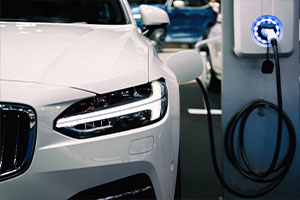
Whether an HOA can prohibit EV chargers depends on two factors: state laws and the governing documents. Some states are explicit in their protection of the right to EV chargers, while others defer to the association’s CC&Rs and bylaws.
In Maryland, Section 11B-111.8 states that an HOA can’t stop owners from installing an electric vehicle charging station in their assigned parking space or private property, as long as they meet certain conditions. This means that no HOA can ban EV chargers or make it unreasonably difficult to install one. If an HOA has such a rule, it is invalid and unenforceable.
Similar provisions exist under the Maryland Condominium Act. Section 11-111.4 prohibits condo associations from outright banning or unreasonably restricting EV charging stations.
Can an HOA Require Approval for EV Charging in an HOA?
In Maryland, homeowners associations may still require residents to submit an application to install EV chargers. Boards will then review the application and approve or deny it based on whether it meets certain conditions. Associations must treat such applications like a normal architectural request.
That said, there are some protections in place. Associations can’t deliberately delay applications. They must also provide a response within 60 days. Failure to respond on time results in an automatic approval.
Homeowners must still secure any required local permits before installation. Requirements can vary by city or county. Most EV charging companies offer assistance with securing permits.
When Should an HOA Approve HOA EV Charging?
Boards can’t just arbitrarily deny applications for electric car charging in HOA communities. According to Maryland law, the HOA must approve the charger if:
- It fits in the assigned parking space of the owner,
- It doesn’t interfere with others, and
- Installation is reasonably possible.
To get approval, an owner must agree to certain terms. First, the owner must follow building codes and safety rules. Second, they must adhere to the association’s design standards. Third, they must hire a licensed contractor for the job. Finally, the owner must pay for their own electricity use.
Who Pays for HOA EV Charging Stations?
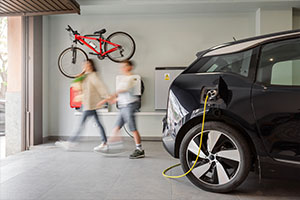
The owner of the EV charger is responsible for all costs. These include installation costs, repairs and maintenance, repair costs for any damage to common areas, electricity usage costs, and the cost of removing or restoring the area later on. Future owners of the home will also shoulder these costs should the property change hands.
Every HOA electric car charging policy must clearly outline the separation of financial responsibilities. This way, owners can’t ask the association to cover costs that it isn’t liable for.
Can Owners Install EV Charging Stations in Common Areas?
Common areas are under the HOA’s responsibility. This usually means that associations can restrict the installation of EV charging stations in these spaces.
In Maryland, if the charger needs access to common elements, such as wiring routes, the HOA can grant permission or a license. This license typically remains valid for up to three years and may be renewed.
Insurance Requirements for Electric Car Charging in HOA
Insurance protects both the owner and the association. It can cover costs related to electric car charging in HOA neighborhoods. Before installation, the owner must either:
- Add the HOA to their insurance policy, or
- Pay any increase in the HOA’s insurance.
Additionally, the insurance must remain active as long as the charger is in use. Boards should clarify insurance requirements in their association’s governing documents.
What About Electric Car Charging in Condos?
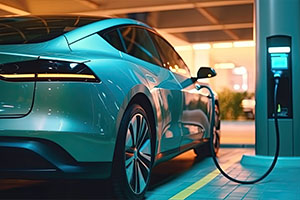
In Maryland, condo associations are governed by the Maryland Condominium Act. Section 11-111.4 discusses the requirements and limitations of EV chargers in condominiums. According to this section, the board may still grant access for EV chargers even if other condo laws might restrict it.
Unit owners have broader responsibility for damage in condos, too. Owners are responsible for damage to the charger and to common elements, as well as to limited common elements.
EV Charging in Condominium Common Elements
According to the statute, the board must approve the installation of EV chargers if it’s in a deeded parking space or a space specifically designated for that unit owner. This usually pertains to a limited common-element parking space, not to fully owned real estate. That means that an owner still has the right to install a charger there even if they don’t own the space outright.
Electric vehicle charging stations often require access to wiring through walls and electrical rooms, as well as connections to shared power systems. Unit owners don’t own these. Instead, they are common elements owned by the association and shared by all owners.
To access these, condo boards can grant a license to use them. As with HOAs, such licenses can last up to three years and may be renewed at the board’s discretion.
As long as it is reasonably possible and doesn’t interfere with others, EV charging installations must be approved. The board can’t deny an application just because the wiring touches the common elements.
That said, the board can still deny the application if the building truly can’t support the installation. The board can also deny it if the installation would damage or disrupt shared systems.
Beneficial to the Community
There is a noticeable shift toward sustainable practices nowadays. Associations would be wise to commit to clean energy, as it helps protect the environment, conserve resources, and attract more buyers. Allowing electric car charging in HOA communities is one way to do that, and in Maryland, it’s even regulated by law.
Majerle Management, Inc. provides management services to HOAs and condo associations in Maryland. Call us today at (301) 220-1850 or contact us online to get started!
RELATED ARTICLES: